
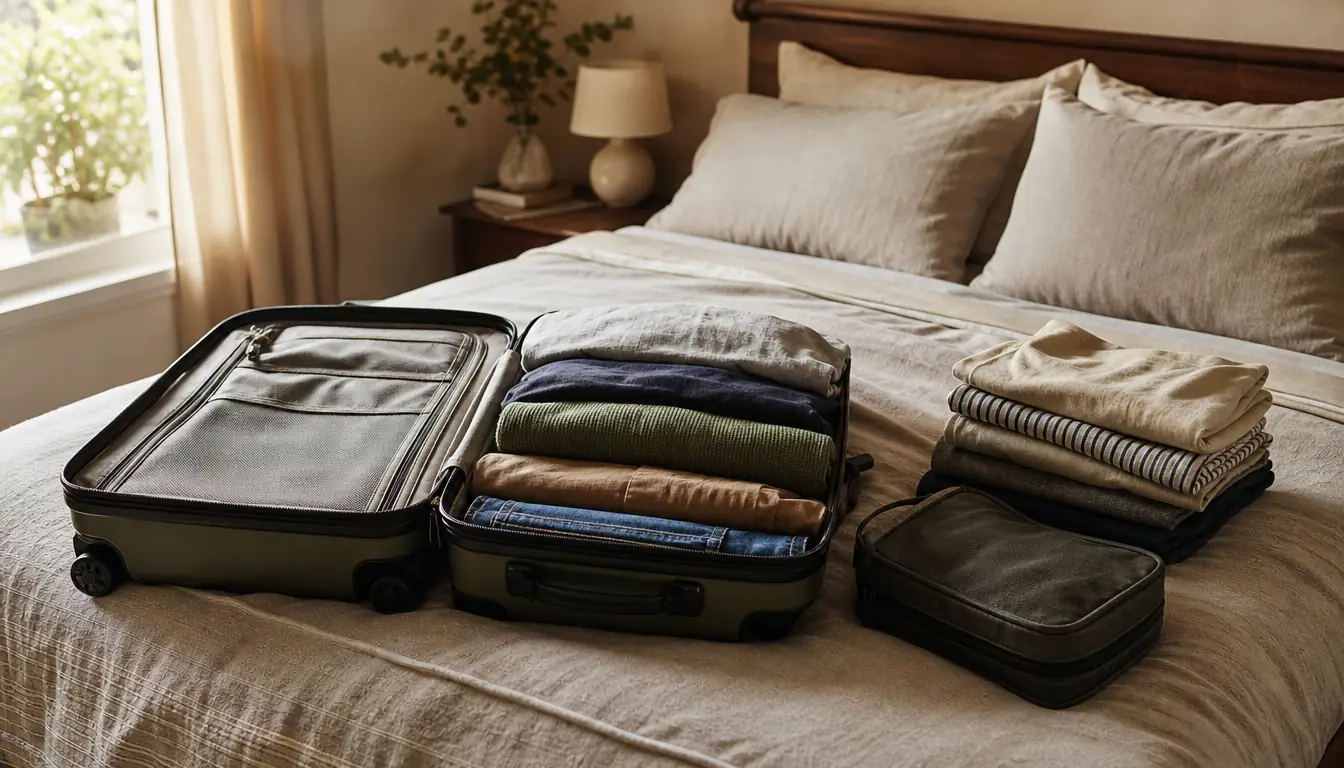
The first carry-on I packed for a week was a masterclass in optimism. I rolled four pairs of jeans, two sweaters, a hairdryer I never used, and a paperback I finished on the first flight. Then I knelt on the suitcase in a Sacramento hotel room at 5:40 in the morning, sweating through my blouse, while Dan stood in the doorway and said nothing, which was the kindest thing he could have done. That was February 2024, a few months into retirement, and I had packed for a woman who was moving house rather than visiting her daughter for seven days.
Before that Denver trip I bought the Samsonite Freeform hardside carry-on with spinner wheels, and roughly fourteen trips later it is still the only suitcase I take on a plane. I am not a travel professional. I am a retired middle-school librarian from Sacramento who flies out of SMF about six times a year, mostly carry-on only, plus a couple of road trips in the Outback. What follows is the routine I actually use, not the one I wish I used. It takes about thirty-five minutes the night before a trip, and it has survived a week in Denver in November, four days in Portland in the rain, and one flight where the gate agent took the bag off me at the jet bridge and handed it back at the other end.
The bag that ended my checked-luggage era
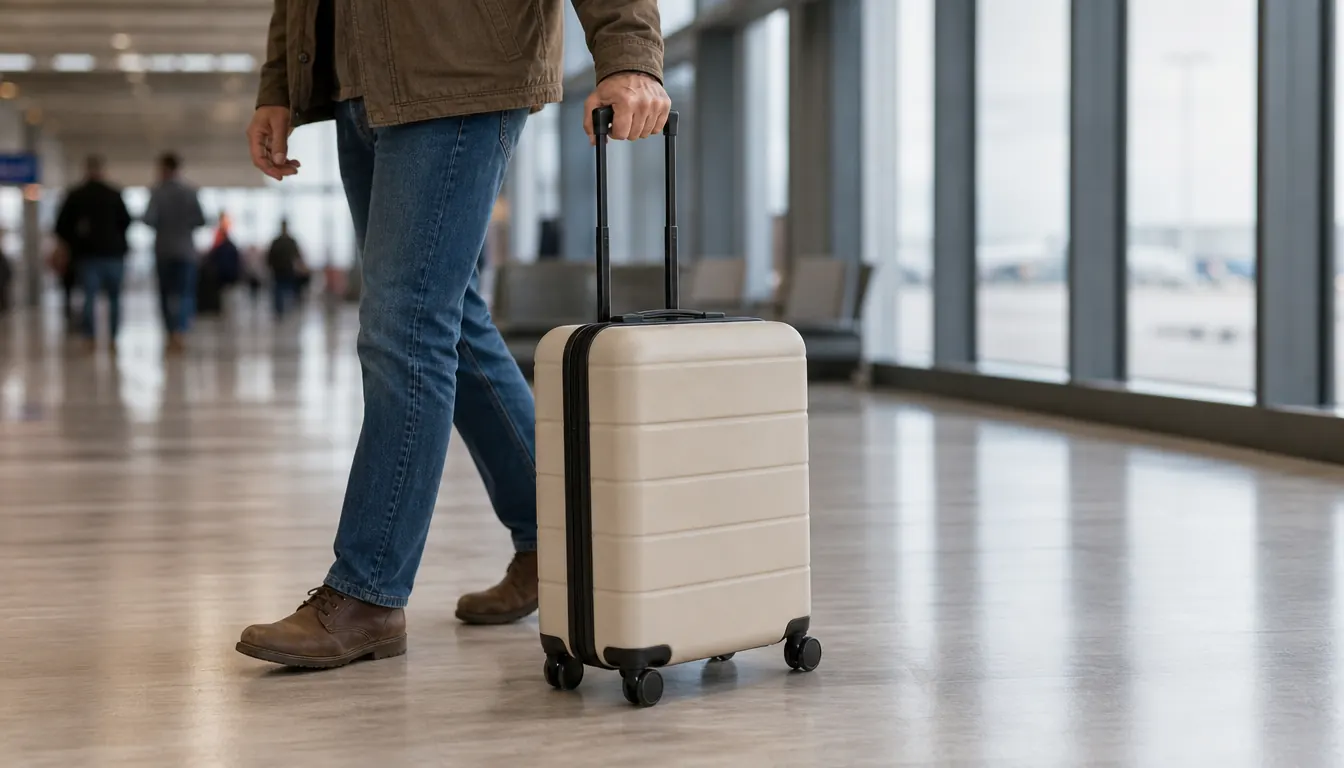
Fourteen trips in, the Samsonite Freeform is still the only suitcase I take on a plane. Four oversized spinner wheels, a 6.5 pound shell, a recessed TSA combination lock, and a cross ribbon that keeps everything exactly where I put it.
Amazon Check Today's Price on Amazon →Step 1: Measure Your Week Against the Interior, Not the Airline Sticker
The Samsonite Freeform measures 23 by 15.3 by 9.8 inches on the outside, counting the wheels and the handle, and that is the number the sizer at the gate cares about. The number you pack against is the interior: 20.5 by 14.5 by 9.8 inches. That is roughly a small laundry basket. It is also the reason the first thing I do on a packing night is not open the closet.
Instead I lay a week of clothes on the bed and count. For seven days in Denver visiting Nora, that is five tops, two pairs of pants, one pair of jeans, one dress or skirt, seven days of underwear and socks, pajamas, one sweater, and the shoes I will wear on the plane. That is the whole list. If the pile does not fit in a laundry basket, it will not fit in the bag, and no amount of clever rolling changes arithmetic. This is where most packing problems actually live. The suitcase is rarely the villain.
One honest note about the shell: it is textured and scratch resistant, and it is not water resistant. I stopped babying it somewhere around trip three and it still looks like luggage rather than a crime scene. But anything that has to stay dry goes inside a zip bag inside a cube. Portland taught me that in about four minutes of walking from a hotel to a car.
November in Denver is the test I use now. The first year I packed for that trip I laid out a wool coat, and the coat alone took a third of the deep half. I stood there for a while, then put the coat back in the closet and packed a lighter jacket and a sweater I could layer underneath instead. Layers are the whole trick in a hardside with no give. The wool coat went on the plane with me, folded over my arm, and I never once wished I had it in the bag.
Step 2: Turn Soft Clothes Into Rectangles Before They Touch the Bag
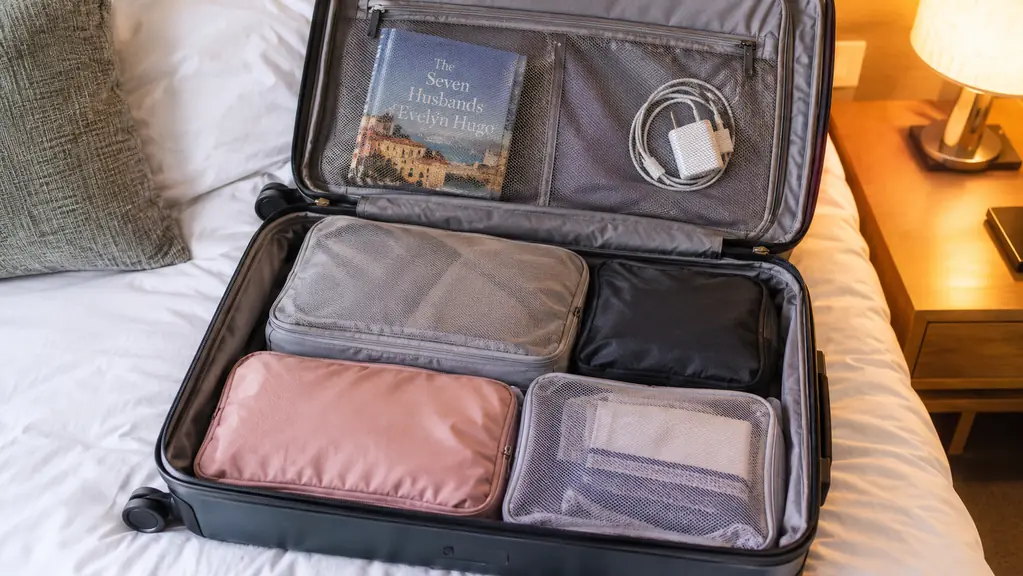
I use the BAGAIL packing cubes I bought the same week as the suitcase. Four of them handle a week: one for tops, one for bottoms, one for underwear and socks, and a small one for chargers and cords. Cold weather pulls out a fifth so the sweater gets its own space. The leftover cubes live in Dan's duffel or in the back of the Outback.
The cubes are not really about saving room, though they help. They are about the fact that a hardside shell has no give. You cannot shove a soft bag's sides outward to make room for one more thing. Everything has to be a rectangle, and cubes are how soft clothes become rectangles. When I packed loose clothes into the Freeform, I got a bag that zipped but bulged, and the bulge was always in the wrong place, usually right up against the telescopic handle.
Roll the tops and the pants. Fold the jeans flat. Put the socks inside the shoes. Then zip each cube and stack them on the bed in the order they will go into the bag. It looks fussy, it takes four minutes, and it is the four minutes that save the twenty.
For the first three trips I did not use cubes at all, because I thought they were a solution in search of a problem. What I actually did was roll everything tight and stack it, and it worked fine on the way out. On the way home it did not, because clothes that have been worn do not roll the way clean ones do, and the whole architecture collapsed into a heap by the second airport. The cubes hold their shape whether what is inside them is folded or wadded, which is the part I did not understand until I tried it.
Step 3: Load the Deep Half First and Strap It Down
Open the Freeform flat on the bed, because that is how a hardside carry-on wants to be packed. One half is deep, the other is the shallow lid side. The deep side gets the cubes, bottoms first, then tops, then the small one wedged into whatever gap is left at the end. Everything is a rectangle, so it stacks like bricks and nothing settles in transit.
Then use the cross ribbon. The Freeform has a cross ribbon and a divider, and the ribbon is the piece I ignored for the first year of owning the bag. It is a stretchable strap that runs across the packed half and holds the cubes tight against the shell. Without it, everything migrates toward the hinge by the time you land, and you open the bag in a hotel room to find a pile leaning against one wall. With it, the bag opens the way you closed it.
The divider goes over the top and has its own pockets, which is where the flat things live: the charging cable, the travel documents, a paperback. Decide what earns one. The shell has three pockets in total, and pockets are where things go to be forgotten for eleven months.
The first time I used the ribbon I did it wrong. I ran it over the top of the stack and clipped it, and the cubes still shifted, because the strap was holding them loosely together rather than pulling them down against the shell. The right way is to press the stack flat with the heel of one hand and pull the strap snug before you clip it, so the cubes compress a little. You will hear the difference when the divider goes down. It lies flat instead of riding up on a lump, and the bag closes with one hand instead of two.
Step 4: Use the Shallow Half for Shoes and Nothing Breakable
The Freeform has a recessed TSA combination lock built into the shell. Recessed matters more than I expected. There is nothing sticking out to snag on a baggage belt, and there is no small padlock to lose in a hotel drawer. I set my combination the week I bought the bag, which Dan describes as a security philosophy rather than a security measure. He is not wrong.
The shallow lid half is where the shoes go, soles toward the shell, with the toiletry bag tucked into the gap if it is a soft one. What does not go there is anything breakable. A rigid shell transfers impact straight through, and the one time I packed a glass bottle in that half it arrived in pieces I was still finding a day later. Breakables go in the personal item, wrapped in clothes.
Zip it and lock it in the bedroom, not at the airport. I have fumbled with that dial in a security line exactly once, hopping on one foot, and I would like to spare you the experience.
Step 5: Roll It Loaded Before You Leave the Driveway
The Samsonite Freeform has four oversized multidirectional spinner wheels, a telescopic extendable handle, and a listed weight of 6.5 pounds when empty. That last number is the one I care about, because it is the weight I pay for before a single sock goes in. Fourteen trips in, my shoulders can tell you the difference between 6.5 and a bag that starts at eleven.
Load it, then roll it around the kitchen. Loaded, mine moves with two fingers on a smooth floor and gets opinionated on carpet, which is true of anything on small wheels. If it pulls to one side, the cubes are not sitting flat and you should open it and re-stack. If the handle feels loose, you have not extended it all the way. Two seconds of adjustment at home beats ten minutes of dragging it wrong through an airport.
I started doing the kitchen roll after a trip where I loaded the bag in a hurry and spent the entire walk to the gate correcting it. One cube had ended up sitting on the hinge end instead of against the far wall, and the bag wanted to go left the whole way. Now I roll it in a straight line across the kitchen floor, once forward and once backward, and if it tracks straight I stop worrying about it. The whole test takes about fifteen seconds and saves me a small argument with my own luggage in public.
Last test: pick it up by both handles. There is one on top and one on the side, and both should feel solid when the bag is full. I have carried mine up three flights of stairs at a small Portland hotel with no elevator, and the side handle is the one that saved my shoulder.
Fourteen trips, two gate checks, and the shell still closes without a shove. The bag was never the problem. The pile on the bed was the problem.
What Else Helps
Two things changed my packing more than the suitcase did. The first is a personal item that does not tip over. I use the MATEIN underseat backpack, bought in August 2024 after a tote bag spent an entire flight face down in the aisle. It holds my iPad, my medications, a cardigan, snacks, a refillable water bottle, and the neck pillow, and it slides under the seat and stays there.
The second is the neck pillow. I bought the napfun memory foam pillow in October 2024, after a 6 a.m. flight to Denver in September where I fell asleep against the window and spent two days with a stiff neck. It clips to the outside of the backpack now. The cover comes off and goes in the machine, which is more than I can say for the one I had before.
And the little plastic tags. One ATUVOS tracker lives in the Samsonite, one in Dan's duffel, one in the backpack, and one on the Outback keys. They run on Apple Find My and we both have iPhones, so this works for us. If you are on Android, this particular tag is not your tag. What I like about them is not the tracking. It is the not wondering.
If your week fits in a laundry basket, it fits in this bag
Twenty and a half inches of interior, a cross ribbon that keeps the cubes where you put them, and a shell that has survived two gate checks without a scratch worth mentioning. Pack it flat, strap it down, roll it loaded before you leave.
Amazon Check Today's Price on Amazon →